

| mobile_3 App Name | Zombie Highway 2 |
| link_2 Google Play Link |  |
| code Developer | Auxbrain Inc |
| account_tree Version | 1.6.3 |
| storage Size | 96.8 MB |
| android Requires Android | 7.0 and up |



MOD Info
– Unlimited Cash & Gold
Zombie Highway 2: Introduction
Zombie Highway 2 uses a progression structure built around repeated survival runs, permanent upgrades, and equipment expansion. Each session contributes resources that improve future attempts, allowing players to gradually extend survival distance and handle stronger threats.
The primary gameplay loop revolves around entering a highway run, surviving zombie attacks, earning cash and objective progress, and investing those rewards into stronger vehicles and weapons. Since every run eventually ends in destruction, long-term progression depends on how efficiently players convert individual attempts into permanent upgrades.
The game’s systems are designed around incremental growth rather than stage completion. Distance traveled, objectives completed, and resources earned become the foundation of progression, creating a system where repeated runs steadily increase overall strength.
Vehicles as the Primary Progression System
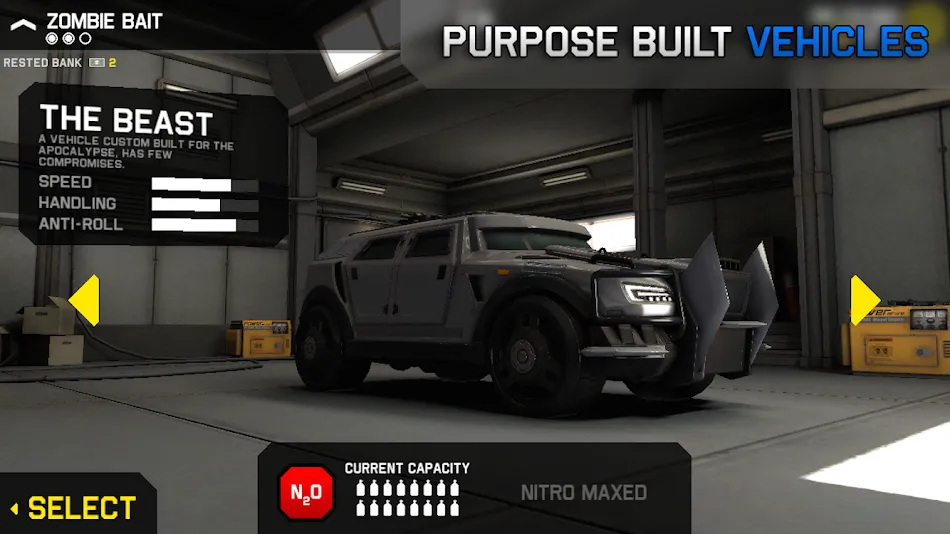
Vehicles serve as the most important progression element in Zombie Highway 2. Each vehicle offers different characteristics that affect survivability, handling, durability, and overall performance during a run.
New vehicles unlock over time and provide alternative approaches to progression. Some emphasize durability, allowing players to survive larger groups of zombies, while others focus on speed or maneuverability. Because vehicles directly influence survival time, they often determine how efficiently players earn resources.
Vehicle selection becomes increasingly important as difficulty rises. A faster vehicle may generate better results on shorter runs, while heavily armored options support longer survival attempts. Players must decide whether to invest resources into improving current vehicles or save currency for stronger unlocks.
Since vehicle performance affects every other system, including combat efficiency and objective completion, progression frequently depends on making effective vehicle investment decisions.
Weapon Progression and Combat Growth
Weapons represent the second major growth system. The game offers multiple firearms that vary in damage output, fire rate, ammunition capacity, and effectiveness against specific zombie types.
Early weapons primarily help remove individual threats, but stronger firearms become necessary as zombie density increases. Weapon upgrades improve damage and efficiency, allowing players to eliminate dangerous enemies more quickly and preserve vehicle durability.
Resource allocation becomes important because weapon upgrades compete with vehicle improvements for available currency. Players who invest heavily in firepower may eliminate threats faster but risk having weaker vehicles, while defensive investments can reduce damage at the cost of slower enemy removal.
Higher-level weapons also improve progression speed because stronger firepower enables longer runs, larger cash rewards, and faster objective completion.
Objectives as a Long-Term Advancement System
Unlike many endless runners that focus entirely on high scores, Zombie Highway 2 uses objectives as a major progression mechanic. Objectives provide structured goals that encourage players to engage with different systems and playstyles.
Tasks may require specific kill counts, distance targets, weapon usage, or survival conditions. Completing these objectives contributes to long-term advancement and often unlocks additional content.
Objectives function as progression milestones because they encourage players to experiment with different vehicles and weapons. Instead of repeatedly pursuing maximum distance, players often adjust their loadouts to complete specific requirements.
This system also creates multiple progression paths. A player can focus on survival distance, objective completion, or resource accumulation depending on current needs.
Resource Management and Currency Spending
Cash serves as the primary resource throughout the game. Nearly every permanent improvement requires currency, making efficient earning and spending essential for long-term growth.
Resources are primarily earned through survival runs. Longer distances, zombie kills, and completed objectives increase overall rewards. Since each run provides limited income, spending decisions have a direct impact on progression speed.
Vehicle upgrades, weapon improvements, and new unlocks all compete for available currency. This creates meaningful decisions because investing in one system often delays progress in another.
Early progression usually favors balanced investments. Improving both vehicles and weapons allows players to handle increasing difficulty more effectively than focusing exclusively on a single system. Later progression becomes more specialized as players identify preferred vehicles and weapon combinations.
Because resources accumulate slowly during unsuccessful runs, efficient survival strategies significantly influence overall advancement.
Difficulty Scaling and Progression Walls
Zombie Highway 2 increases difficulty primarily through enemy density, zombie aggression, and environmental hazards. Longer runs introduce larger groups of enemies and create situations where mistakes become increasingly costly.
Vehicle damage accumulates over time, while zombies become more difficult to manage through driving alone. This creates natural progression walls where players can no longer rely solely on existing equipment.
Overcoming these walls generally requires stronger vehicles, upgraded weapons, or more efficient resource allocation. Progression therefore becomes closely tied to optimization rather than simple repetition.
Difficulty also forces players to prioritize certain upgrades. Increased durability may become necessary during one stage of progression, while stronger weapons may provide greater benefits during another. These shifting priorities help maintain long-term progression goals.
The game’s scaling system ensures that new upgrades provide meaningful improvements rather than simply increasing numerical values.
Daily Challenges and Supplemental Progression
Daily challenges provide additional progression opportunities outside standard runs. These activities introduce specific conditions and reward players with extra resources.
Because daily challenges often require alternative strategies or equipment choices, they encourage broader use of the game’s systems. Players may temporarily prioritize certain vehicles or weapons to maximize rewards.
These activities also help reduce progression bottlenecks by providing additional sources of resources. When standard runs become less efficient, challenge rewards can support continued advancement.
Although daily challenges are not the central progression system, they contribute to long-term resource generation and unlock progression.
Optimization and Upgrade Priorities
Efficient progression depends on understanding which upgrades provide the greatest benefit at different stages.
Early progression usually benefits from affordable improvements that increase survival consistency. Moderate vehicle upgrades and weapon improvements often provide the best return on investment.
Mid-game progression shifts toward specialized equipment and stronger loadouts. Players begin focusing resources on preferred vehicles and high-performing weapons.
Late progression emphasizes optimization rather than expansion. Instead of unlocking new content, players maximize existing equipment and pursue increasingly difficult objectives.
Resource efficiency becomes particularly important because expensive upgrades require substantial investment. Players who spend currency strategically generally progress faster than those who distribute resources randomly.
Long-Term Goals and Endgame Progression
The long-term progression structure in Zombie Highway 2 centers on completing objectives, unlocking all vehicles, improving weapons, and achieving longer survival distances.
Since the game lacks a traditional campaign, progression goals are largely driven by collection, optimization, and performance improvement. Players continue pursuing stronger loadouts and more efficient builds even after acquiring major upgrades.
High-value weapons, fully upgraded vehicles, and completed objective lists become the primary endgame targets. Daily challenges and high-score attempts provide additional reasons to continue investing in progression systems.
Ultimately, Zombie Highway 2 uses a layered progression structure where vehicles, weapons, objectives, and resource management work together. Permanent upgrades increase survival potential, stronger equipment improves earning efficiency, and long-term optimization determines how quickly players advance through the game’s systems.
Installing Zombie Highway 2 on Your Android Device
Follow the simple instructions below to install {Evony} on your Android smartphone or tablet.
1. Get the Latest APK File
Download the latest version of the APK from the download link provided above and wait for the file to finish downloading.
2. Enable Unknown App Installation
If prompted, allow your browser or file manager to install applications from external sources through your device settings.
3. Find the Downloaded APK
Open your Downloads folder or preferred file manager and locate the downloaded APK file.
4. Begin the Installation
Tap the APK file and select the Install option. The installation process may take a few seconds depending on your device.
5. Launch the Application
Once the installation is complete, open Zombie Highway 2 from your app drawer and start using the app.
FAQs
How does progression work in Zombie Highway 2?
Progression in Zombie Highway 2 is based on completing survival runs, earning cash, and finishing objectives. Players use these rewards to unlock new vehicles, purchase weapons, and upgrade equipment, allowing them to survive longer and progress further.
What is the most important resource in Zombie Highway 2?
Cash is the primary resource in the game. It is earned during runs and spent on vehicle upgrades, weapon improvements, and new unlocks. Efficient currency management significantly affects long-term progression.
How do players unlock new vehicles and weapons?
New vehicles and weapons become available through objective completion, accumulated currency, and progression milestones. Some equipment requires players to reach specific achievements before it can be purchased.
Which upgrades should players prioritize first?
Early progression usually benefits from balanced investments in both vehicles and weapons. Improving vehicle durability and upgrading reliable weapons helps players survive longer and earn more resources.
Does Zombie Highway 2 have an endgame progression system?
The game does not feature a traditional endgame, but long-term progression revolves around completing objectives, fully upgrading vehicles and weapons, finishing daily challenges, and achieving longer survival distances.
How does the game’s difficulty increase over time?
Difficulty scales through larger zombie groups, more aggressive enemies, increased road hazards, and longer survival runs. Stronger equipment and efficient resource management become necessary to overcome these progression barriers.