

| mobile_3 App Name | Megapolis |
| link_2 Google Play Link |  |
| code Developer | Social Quantum Ltd |
| account_tree Version | 16.0.0 |
| storage Size | 99.3 MB |
| android Requires Android | 7.0 and up |
MOD Info
– Unlimited Coins
– Free Spend
Megapolis: Introduction
Megapolis builds its progression around the steady expansion of a modern city rather than leveling up a character. Every improvement made to the city contributes to unlocking larger construction projects, more advanced industries, and increasingly complex management systems. Growth depends on maintaining a stable economy, expanding production capacity, and investing resources where they create the greatest long-term value.
The game’s core progression follows a continuous cycle. Players collect income and manufactured goods, invest them into new buildings and infrastructure, unlock additional content, and use those new systems to produce even greater amounts of resources. Each completed expansion increases the city’s overall capabilities, allowing larger projects that were previously unavailable.
Unlike games with fixed campaigns or chapters, Megapolis offers an open-ended progression path where city development itself serves as the primary measure of advancement.
Construction Is the Foundation of Every System
Nearly every gameplay mechanic connects back to construction. New residential buildings increase population, commercial buildings improve revenue generation, and industrial facilities expand production capabilities. Infrastructure projects such as transportation networks and public services support continued city growth while unlocking additional development opportunities.
Each construction project requires planning because available resources are shared across multiple systems. Spending heavily on one district may delay industrial expansion, while focusing entirely on factories can slow population growth needed for future unlocks.
Building placement also influences long-term efficiency. As the city becomes larger, reorganizing districts becomes increasingly expensive and time-consuming, making thoughtful expansion more valuable than simply placing structures wherever space is available.
Because every major feature depends on previous construction milestones, expanding the city is the central progression mechanic throughout the game.
Production Systems Power City Growth
Economic development eventually shifts toward managing production chains that supply construction projects with necessary materials.
Factories manufacture basic resources that can later be processed into advanced goods required by larger buildings and specialized facilities. Construction cannot continue unless these materials are available, making production management one of the most important systems in the game.
As additional factories become available, players must determine which goods should remain in constant production and which should be manufactured only when specific projects require them. Production timers encourage scheduling work in advance, especially when larger developments consume several different materials at once.
Expanding industrial capacity reduces bottlenecks by allowing multiple production lines to operate simultaneously, increasing the pace of city development.
Resource Management Determines Progression Speed
Megapolis uses several interconnected resources that influence different parts of city growth.
Coins remain the primary economic currency and are earned from developed areas of the city. They fund construction, expansion, and many routine upgrades. While earning additional coins supports faster growth, money alone cannot complete every project.
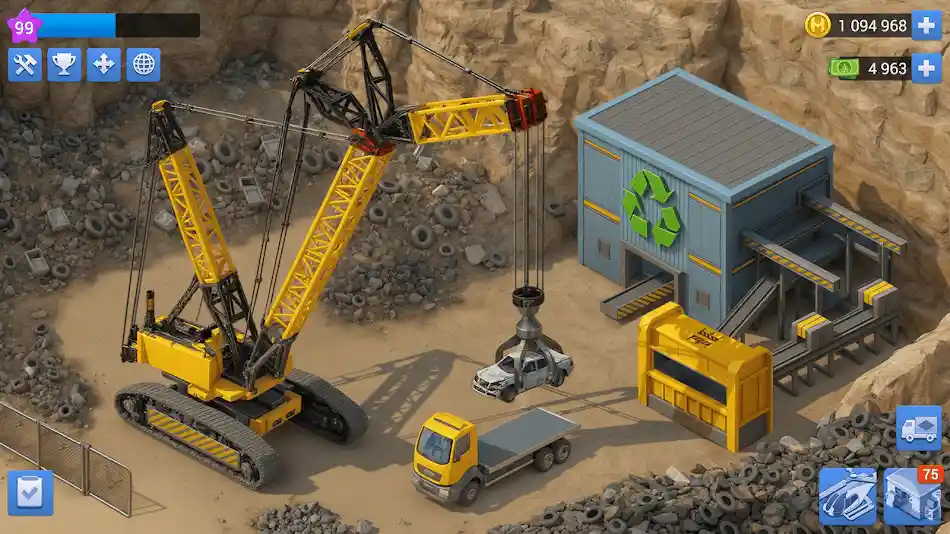
Industrial materials become equally important because advanced buildings consume large quantities of manufactured goods. Steel, construction supplies, processed materials, and other industrial products are produced over time before being invested into new developments.
Premium currency offers opportunities to reduce waiting times or acquire exclusive content more quickly, but efficient resource planning remains the primary driver of long-term progression.
Seasonal events frequently introduce temporary currencies that reward participation with unique buildings or valuable progression items. Choosing whether to invest resources into permanent city growth or limited-time rewards becomes part of the game’s ongoing resource strategy.
Unlock Systems Expand Available Content
Most gameplay features become available gradually through city development instead of completing traditional story missions.
Increasing population unlocks additional buildings and districts, while infrastructure expansion introduces new industries and specialized facilities. Larger cities eventually gain access to advanced systems including scientific research, mining operations, transportation hubs, and military-related projects.
Each unlock builds upon earlier progression. New industries require existing production networks, while advanced infrastructure depends on sufficient economic strength to support its construction and maintenance.
This layered progression encourages balanced development rather than concentrating resources on a single area of the city.
Specialized Systems Support Long-Term Growth
Beyond standard construction, Megapolis introduces several systems that strengthen the city’s economy over time.
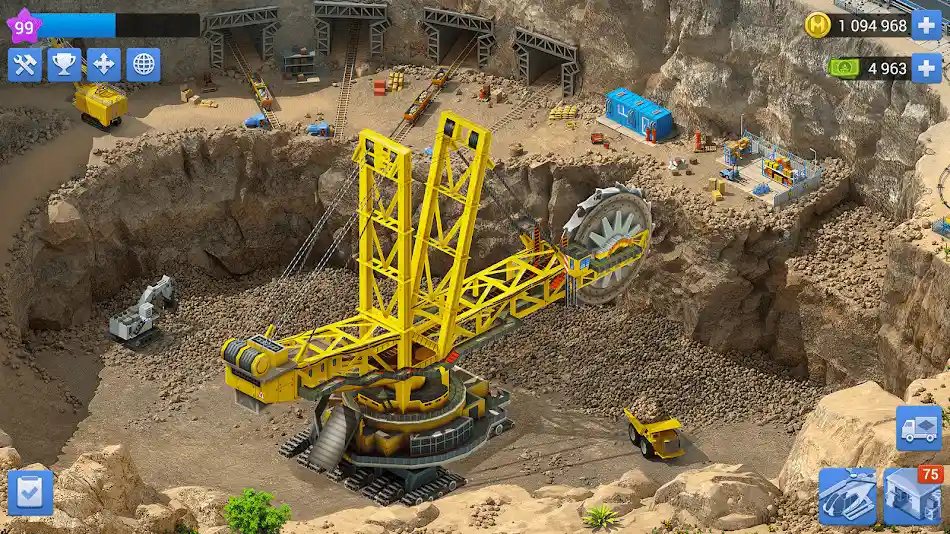
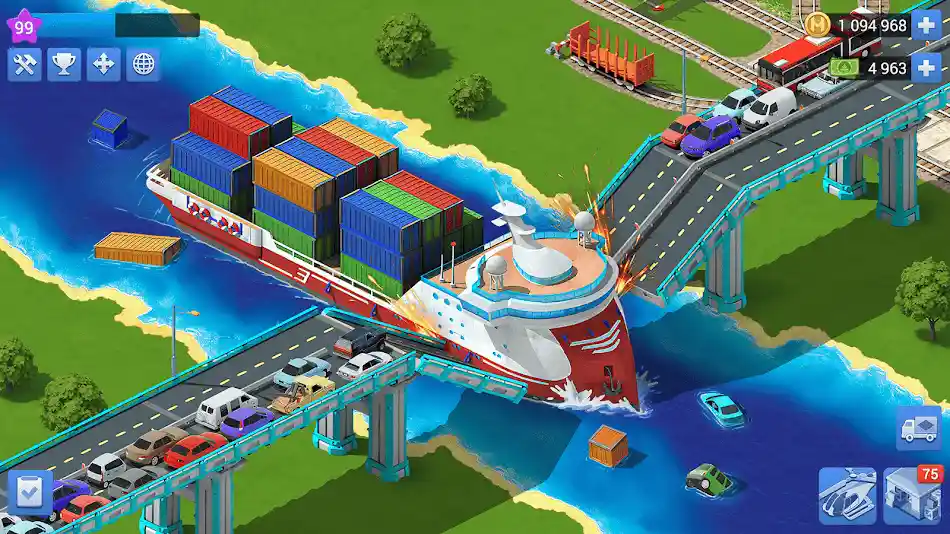
Research facilities improve development by unlocking technological advancements that enhance production and infrastructure. Mining and oil extraction provide valuable raw materials needed for advanced industries, while transportation systems connect different sectors of the city through airports, railways, and shipping facilities.
These specialized mechanics increase overall production efficiency rather than replacing earlier systems. Players continue relying on residential expansion, manufacturing, and resource collection while integrating newer industries into the existing economy.
As more systems become available, managing how they interact becomes increasingly important for maintaining steady progression.
Managing Difficulty Through Efficient Development
Progression becomes more demanding because projects require greater investments of time and resources.
Construction costs increase as the city expands, advanced materials take longer to manufacture, and larger developments consume multiple resource types simultaneously. New content often requires meeting population goals while also maintaining sufficient production capacity to support continued construction.
Limited space introduces another progression challenge. Players must expand carefully while leaving room for future industries, transportation routes, and specialized buildings. Poor planning can restrict future development or require costly redesigns.
Overcoming these progression walls depends on improving production efficiency, increasing resource generation, and maintaining balanced investment across residential, commercial, and industrial sectors.
Optimizing the Economy for Late-Game Progression
As the city grows, optimization becomes more valuable than simple expansion. Players work toward creating reliable production cycles capable of supplying multiple construction projects without interrupting resource generation.
Factories should remain active whenever possible, while coins are continually reinvested into buildings that improve long-term income or unlock additional gameplay systems. Infrastructure projects become more important because they support higher production levels and allow larger-scale developments to proceed efficiently.
State competitions and seasonal events provide additional objectives that reward well-developed cities with valuable resources and exclusive unlocks. Participating consistently in these activities helps accelerate progression while expanding the collection of unique buildings.
Long-term success ultimately depends on maintaining an efficient balance between income generation, industrial production, population growth, and infrastructure expansion. Rather than reaching a final objective, Megapolis continually introduces larger construction goals that encourage players to refine their economy and develop an increasingly sophisticated metropolitan network.
Installing Megapolis on Your Android Device
Follow the simple instructions below to install Megapolis on your Android smartphone or tablet.
1. Get the Latest APK File
Download the latest version of the APK from the download link provided above and wait for the file to finish downloading.
2. Enable Unknown App Installation
If prompted, allow your browser or file manager to install applications from external sources through your device settings.
3. Find the Downloaded APK
Open your Downloads folder or preferred file manager and locate the downloaded APK file.
4. Begin the Installation
Tap the APK file and select the Install option. The installation process may take a few seconds depending on your device.
5. Launch the Application
Once the installation is complete, open Megapolis from your app drawer and start using the app.
FAQs
Q1. What is the main goal of building industries in Megapolis?
Industries produce the construction materials and manufactured goods needed for city expansion. Developing these production chains is essential for completing larger projects and unlocking advanced content.
Q2. How do events help with progression in Megapolis?
Limited-time events reward players with valuable resources, exclusive buildings, and special currencies that can speed up city development and expand building collections without relying solely on standard progression.
Q3. What limits progression in the later stages of Megapolis?
Late-game progression is typically limited by resource production, construction requirements, available land, and the time needed to manufacture advanced materials. Improving production efficiency helps reduce these bottlenecks.
Q4. Is city layout important in Megapolis?
Yes. A well-planned city layout makes it easier to expand infrastructure, organize industrial zones, and accommodate future buildings, helping support efficient long-term development as the city grows.