


| mobile_3 App Name | King of Thieves |
| link_2 Google Play Link |  |
| code Developer | Nazara Publishing |
| account_tree Version | 2.83 |
| storage Size | 116 MB |
| android Requires Android | 7.0 and up |



MOD Info
– Unlimited Gold
– Unlimited Orbs
King of Thieves: Introduction
King of Thieves revolves around an interconnected progression system where offensive success and defensive planning are equally important. Instead of collecting increasingly powerful weapons or assembling character builds, players develop their account by stealing valuable resources, upgrading permanent systems, and protecting their own treasure from rival thieves. Every major mechanic contributes to this cycle, making efficient resource management the key to steady advancement.
Unlike many mobile progression games, growth is not tied to completing a linear campaign alone. While new dungeons unlock over time, the majority of progression comes from repeatedly raiding player-created bases, improving your own dungeon, and increasing the value of your gem collection.
The Progression Loop Connects Every Major System
The game’s progression begins with raids. Players spend lockpicks to enter another player’s dungeon, navigate its traps, and attempt to steal the protected treasure. Completing successful raids rewards gold and occasionally valuable gems, both of which feed directly into future upgrades.
The resources earned from raids are invested into strengthening your own dungeon through trap upgrades, permanent account improvements, and gem development. As your dungeon becomes stronger, valuable gems become easier to protect during rituals, allowing you to generate even greater rewards. This creates a continuous loop where every successful raid supports future progression while every successful defense protects previous investments.
Because both attack and defense influence overall growth, neglecting either side eventually slows account progression.
Gold Supports Nearly Every Upgrade
Gold is the most commonly earned resource and serves as the foundation of the upgrade economy. Nearly every permanent improvement requires a steady supply of gold, making regular raiding essential throughout the game.
One of gold’s primary uses is upgrading dungeon traps. Higher-level traps become more dangerous and increase the likelihood of defeating incoming raiders before they can steal valuable gems. Gold is also invested into additional progression systems that improve long-term efficiency instead of providing temporary bonuses.
Since gold is earned continuously but spent just as quickly, deciding where to invest it has a direct impact on progression speed. Players who spread resources across too many upgrades often advance more slowly than those who prioritize their most effective defensive systems.
Gems Are Both Treasure and Progression
The gem system separates King of Thieves from many traditional mobile games. Rather than functioning as simple collectibles, gems represent the primary long-term objective of progression.
Players acquire gems through successful raids and other rewards, but their true value comes from rituals. During a ritual, a gem is placed inside your dungeon for a set period. If it remains protected until the ritual ends, its value increases significantly.
This creates an ongoing risk-versus-reward system. Valuable gems produce stronger long-term progression, but they also encourage other players to attack your dungeon. Before beginning expensive rituals, players often improve their defenses to reduce the chance of losing their investment.
Because gem value determines ranking potential and overall account growth, protecting completed rituals becomes one of the game’s highest priorities.
Defensive Upgrades Protect Future Progress
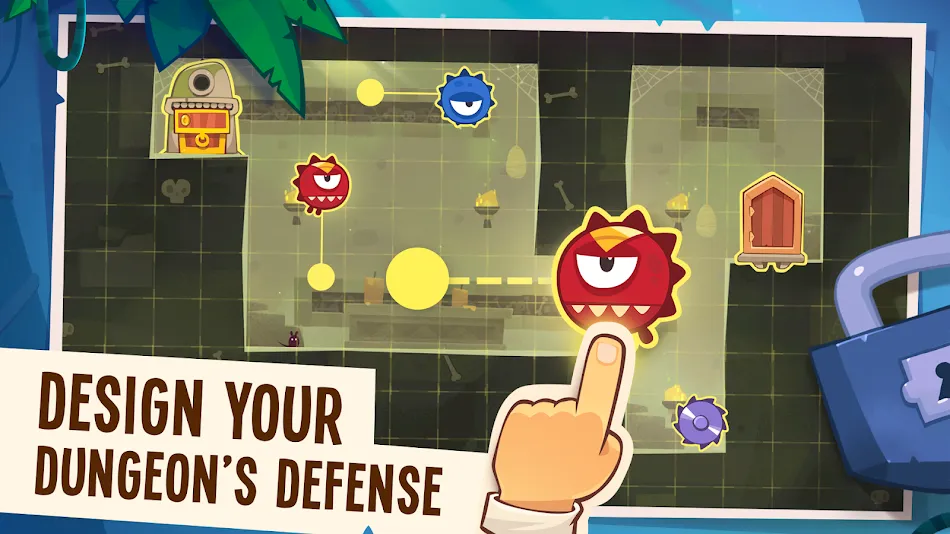
Building an effective dungeon is not simply a secondary activity—it is one of the primary progression systems. Every successful defense prevents resource losses that would otherwise delay future upgrades.
Players can strengthen various traps while experimenting with their placement to create increasingly difficult obstacle courses. Since every dungeon must remain technically completable, designing an effective layout involves combining multiple hazards into routes that demand precise movement rather than relying on impossible configurations.
Trap upgrades improve the effectiveness of these hazards, making defensive investment worthwhile throughout every stage of progression. As opponents become more experienced, simply increasing trap levels is rarely enough, encouraging players to continually refine their dungeon layouts alongside numerical upgrades.
Permanent Growth Comes from Account Upgrades
Instead of replacing outdated equipment with stronger gear, King of Thieves emphasizes permanent account progression.
The Throne functions as a central upgrade system that provides lasting bonuses affecting multiple areas of gameplay. Improvements earned through the Throne increase long-term efficiency by strengthening various progression mechanics rather than offering temporary boosts.
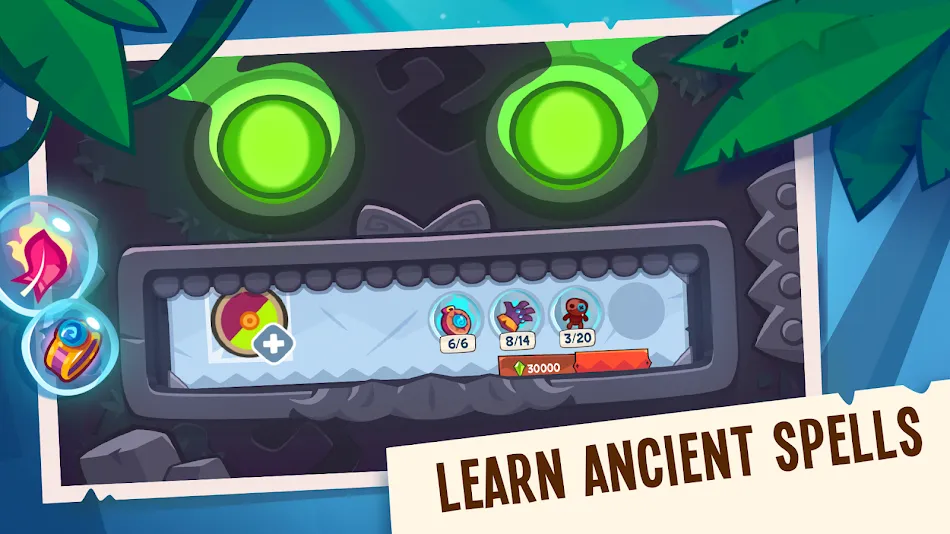
Spells introduce another layer of advancement by providing tactical advantages during raids. Unlocking and upgrading these abilities expands strategic options without replacing the importance of mechanical skill or efficient resource management.
Because these upgrades remain active indefinitely, investing in permanent systems steadily improves progression over time and reduces dependence on short-term rewards.
Managing Multiple Resources Efficiently
Several different resources support the game’s progression systems, each serving a distinct purpose.
Gold remains the primary upgrade currency, while gems represent long-term wealth. Additional materials, including orbs and emeralds, contribute to specialized upgrades and advanced progression features.
Since these resources are acquired at different rates, players regularly decide which systems deserve immediate investment. Spending heavily on trap upgrades may improve defense but delay other permanent improvements, while focusing only on gem development can expose valuable rituals to unnecessary risk.
Efficient progression comes from balancing resource allocation instead of maximizing a single upgrade path.
Progression Slows as Competition Increases
As players move into higher leagues, progression depends less on basic upgrades and more on optimization. Opposing dungeons feature stronger traps, more refined layouts, and better-protected gems, making successful raids increasingly difficult.
At the same time, rituals involving valuable gems require greater defensive preparation. Longer ritual timers increase the opportunity for enemy raids, making strong dungeon layouts increasingly important for preserving resources.
These progression walls are typically overcome by improving permanent upgrades, strengthening defensive systems, and selecting raid targets that provide worthwhile rewards without creating unnecessary resource losses.
Rather than introducing entirely new mechanics, the game expands the importance of systems players have used since the beginning.
Long-Term Progression Focuses on Efficiency
After unlocking the core systems, progression becomes an ongoing process of optimization. Players continue improving trap levels, increasing gem values, unlocking stronger permanent upgrades, and climbing competitive leagues.
Guild participation adds another progression layer through Guild Wars and cooperative competition, providing additional rewards that contribute to account development. Seasonal rankings and league advancement encourage continuous improvement rather than a fixed ending point.
Because every major progression system supports the others, long-term success comes from maintaining a balanced approach. Consistent raiding supplies resources, permanent upgrades improve efficiency, stronger defenses protect valuable rituals, and successful rituals generate increasingly valuable gems that drive the next stage of progression. This interconnected structure forms the foundation of King of Thieves’ long-term progression system and defines how players continue strengthening their account over time.
Installing King of Thieves on Your Android Device
Follow the simple instructions below to install King of Thieves on your Android smartphone or tablet.
1. Get the Latest APK File
Download the latest version of the APK from the download link provided above and wait for the file to finish downloading.
2. Enable Unknown App Installation
If prompted, allow your browser or file manager to install applications from external sources through your device settings.
3. Find the Downloaded APK
Open your Downloads folder or preferred file manager and locate the downloaded APK file.
4. Begin the Installation
Tap the APK file and select the Install option. The installation process may take a few seconds depending on your device.
5. Launch the Application
Once the installation is complete, open King of Thieves from your app drawer and start using the app.
FAQs
Q1. What are gems used for in King of Thieves?
Gems are the game’s most valuable collectible resource. Players can steal them during raids, combine and improve them through rituals, and protect them inside their dungeon to increase their overall wealth and league ranking.
Q2. Why are dungeon defenses important in King of Thieves?
A strong dungeon helps prevent other players from stealing your gems during rituals. Upgrading traps and designing an effective dungeon layout protects valuable resources and supports long-term progression.
Q3. Which resources are the most important in King of Thieves?
Gold is essential for upgrading traps and permanent systems, while gems are the primary long-term progression resource. Other materials, such as orbs and emeralds, are used for specific upgrades and progression features.
Q4. Does King of Thieves have character classes or equipment?
No. Every player controls the same thief, and progression comes from permanent account upgrades, stronger dungeon defenses, spells, and valuable gems rather than different classes or equipment.
Q5. What is the long-term goal in King of Thieves?
The long-term objective is to build increasingly valuable gems, strengthen your dungeon, upgrade permanent systems, climb league rankings, compete in Guild Wars, and maintain efficient resource growth through successful raids and defenses.